What ah Rass! Netanyahu Lose? Israel’s Election Could Change More Than Its Government

Updated: 3 days ago
Israel’s election-night exit polls suggest that Benjamin Netanyahu’s governing bloc has lost its parliamentary majority, while Gadi Eisenkot’s opposition faces the difficult task of assembling a government. Beyond the immediate political contest, the results raise consequential questions about Palestinian representation, the war involving Iran, American influence in the Middle East and the future of Israeli security policy.

An Election That Could Reshape the Middle East
There is something rather extraordinary about watching an election in a country whose domestic political decisions carry consequences extending far beyond its borders, particularly when that country is simultaneously confronting questions of war, territorial control, international accountability and its relationship with the world’s most powerful military and diplomatic partner. On Tuesday evening, Israel’s parliamentary election appeared to produce precisely such a moment, with television exit polls projecting approximately 50 seats for Prime Minister Benjamin Netanyahu’s political bloc, compared with roughly 52 or 53 for the principal opposition grouping associated with former military chief Gadi Eisenkot, while Arab-led parties were projected to secure approximately 17 additional seats.
The numbers require careful interpretation because Israel’s 120-member Knesset operates through parliamentary coalition politics, meaning that the largest party or political bloc does not automatically form the government, and a prospective prime minister must demonstrate the ability to command sufficient parliamentary support. Nevertheless, the projections suggest that Netanyahu’s established political alliance may no longer possess the numbers necessary to govern independently, creating an opening for Eisenkot while exposing the substantial ideological differences among the parties whose cooperation would be necessary to replace the incumbent administration.

The election also produced an extraordinary level of public participation, with Al Jazeera’s election-night coverage reporting near-final turnout of approximately 77.7 percent, described as the highest since 1999, an indication of the intensity surrounding Israel’s political future after years of conflict, domestic polarization and controversy over the government’s conduct. Such participation does not necessarily establish a unified public demand for a particular policy, but it does suggest that the electorate understands the significance of the political choices confronting the country, including decisions that may influence the direction of regional security, relations with Washington and the treatment of Palestinians.
Netanyahu May Have Lost the Numbers, but Eisenkot Has Not Yet Won the Government
One of the most consequential observations during Al Jazeera’s election-night analysis came from commentator Alon, who emphasized that the frequently repeated comparison between Netanyahu’s approximately 50 seats and Eisenkot’s 52 or 53 excludes Arab-led parties, producing a considerably different parliamentary picture when the entire opposition to Netanyahu is considered. On that broader calculation, parties outside Netanyahu’s political bloc could collectively account for approximately 70 seats, although describing those representatives as a single governing coalition would obscure substantial disagreements concerning Palestinian rights, national security, political participation and the future composition of Israel’s government.
Three principal scenarios therefore emerge from the provisional results: Netanyahu could attempt to remain in power through an unusually broad national unity arrangement, Eisenkot could establish a minority administration dependent upon external parliamentary support from Arab-led parties, or the opposition could negotiate a formal coalition incorporating representatives who have historically encountered significant barriers to participation in Israeli national governments. Each possibility carries political costs, particularly because Eisenkot’s appeal has been associated with ending Netanyahu’s tenure, while Netanyahu’s own political survival is complicated by ongoing corruption proceedings and the reluctance of some potential partners to enter an arrangement that might preserve his influence.

The distinction between parliamentary opposition and governing compatibility is particularly important because a collection of parties may agree that an incumbent should leave office without agreeing on the policies, appointments and legislative compromises necessary to administer the country afterward. Israel could therefore experience a prolonged period of coalition negotiations, a temporary government with limited political flexibility or another attempt to assemble a national unity administration, with the ultimate outcome depending less on the symbolic declaration of an electoral winner than on the practical willingness of political leaders to accept compromises they previously rejected.
The Palestinian Question Becomes Central to Coalition Arithmetic
Perhaps the most revealing implication of the election concerns the projected representation of Arab-led parties, whose approximately 17 seats could become indispensable to the formation or survival of a government led by Eisenkot. As Alon observed during the broadcast, these representatives cannot reasonably be expected to provide parliamentary support indefinitely without seeking meaningful concessions on issues affecting their constituents, particularly when Arab citizens constitute approximately one-fifth of Israel’s population and have legitimate democratic interests extending beyond their usefulness in coalition calculations.
This introduces an important distinction between Arab citizens of Israel, who participate in Israeli parliamentary elections, and Palestinians living in the occupied West Bank and Gaza, whose political rights and relationship with Israeli institutions are governed by fundamentally different legal and political circumstances. Nevertheless, the inclusion of Arab-led parties in government formation could influence debates concerning equality, policing, public investment, civil liberties and Israeli policy toward Palestinians, although their participation would not automatically guarantee substantial changes to military operations, territorial policy or the broader Israeli-Palestinian conflict.
From a strategic perspective, the first-order consequence would be increased bargaining power for Arab-led parties, while a second-order effect could involve pressure on an Eisenkot administration to demonstrate that its parliamentary dependence produces tangible policy outcomes rather than merely providing the votes necessary to remove Netanyahu. A third-order consequence could emerge if meaningful political participation begins changing the incentives of other Israeli parties, although the opposite outcome is equally possible if concessions generate nationalist backlash, destabilize the coalition or encourage political actors to portray Arab participation as a threat to national security.
What Could Change for Gaza and the Wider Palestinian Territories?
The possibility of Netanyahu leaving office raises understandable questions about whether Israeli policy toward Gaza and the occupied Palestinian territories would change, particularly given the international controversy surrounding the conduct of the war, allegations of grave violations of international humanitarian law and continuing demands for accountability. However, replacing Netanyahu with Eisenkot would not necessarily represent a fundamental departure from Israel’s established security doctrine, because Eisenkot is himself a former military chief whose political identity is closely associated with national defense and the country’s security establishment.
The more realistic immediate possibility would be a change in the government’s political management of the conflict, including its willingness to negotiate particular arrangements, respond to international diplomatic pressure or reconsider policies that have become closely associated with Netanyahu’s coalition partners. Whether such changes would materially improve Palestinian civilian protection, humanitarian access, reconstruction prospects or the possibility of Palestinian self-determination would depend on specific government decisions rather than the assumption that a different prime minister necessarily represents a different strategic objective.

For Palestinian political leaders, regional governments and international humanitarian organizations, the most important indicators would therefore be concrete changes in military operations, civilian protection, aid access, settlement policy and diplomatic engagement, rather than rhetorical commitments accompanying the formation of a new Israeli administration. A government that changes its leadership while preserving substantially similar policies may produce a different international presentation without necessarily altering the conditions experienced by Palestinians, making the distinction between political transition and policy transformation essential to any serious assessment.
Iran and the Possibility of Strategic Recalculation
The implications for Iran could be equally consequential because Israeli security policy toward Tehran has developed through years of confrontation involving nuclear concerns, regional armed groups, intelligence operations and direct military escalation. Netanyahu has long positioned himself as a central figure in Israel’s opposition to Iranian regional influence, but the underlying concerns about Iran’s military capabilities and nuclear program extend across substantial portions of Israel’s political and security establishment.
Consequently, an Eisenkot government would not necessarily abandon military pressure on Iran or reverse Israel’s broader security objectives, although a change in leadership could influence the timing, diplomatic coordination and political conditions under which future operations are authorized. The immediate strategic question would be whether a new administration sought to consolidate existing military gains, establish a more predictable relationship with Washington or pursue negotiations that might reduce the likelihood of further regional escalation without compromising what Israeli officials consider essential security interests.
A second-order consequence could involve Iranian calculations about Israeli political cohesion, particularly if coalition negotiations produce uncertainty concerning the authority or durability of the next government. Tehran might interpret political fragmentation as a temporary constraint on Israeli decision-making, but such an assessment would carry considerable risk because Israeli military institutions retain operational capabilities and established security priorities regardless of which political leader occupies the prime minister’s office.
A third-order consequence concerns the wider region, where governments and commercial actors must evaluate whether Israeli political change could alter the prospects for de-escalation, energy-market stability, shipping security and diplomatic engagement. If a new administration reduced uncertainty surrounding the conflict, regional economies could potentially benefit through lower security risks and improved commercial confidence, although those outcomes would depend on developments involving Iran, the United States and other regional actors rather than Israeli domestic politics alone.
What the Election Signals for Donald Trump
The election also carries implications for President Donald Trump, whose relationship with Netanyahu has been an important feature of American policy toward Israel and whose reported endorsement of the incumbent introduces an additional political dimension to the results. If Netanyahu ultimately fails to retain office despite American presidential support, the outcome would demonstrate the limits of external political influence over an electorate whose decisions are shaped by domestic institutions, competing security priorities and judgments concerning its own leadership.
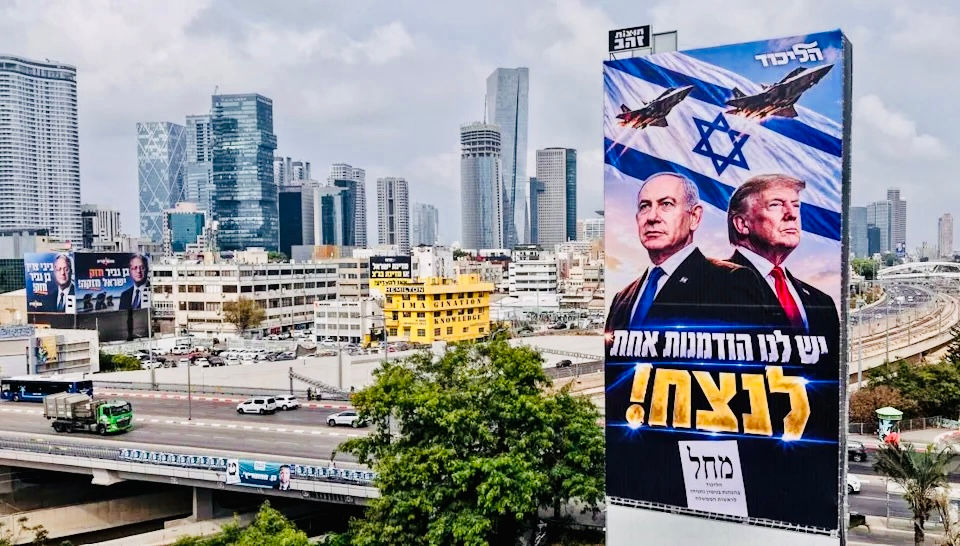
That would not necessarily constitute a comprehensive rejection of Trump’s Middle East policies, nor would it establish that Israeli voters intended to deliver a message to Washington, because electoral behavior reflects multiple considerations that cannot be reduced to the preferences of a foreign leader. Nevertheless, the result could require the White House to establish a working relationship with a different Israeli administration, potentially creating opportunities to reconsider diplomatic approaches while also introducing uncertainty concerning agreements, commitments and personal relationships developed under Netanyahu.
The broader strategic consideration is whether Washington’s influence depends excessively on relationships with particular political leaders rather than durable institutional arrangements capable of surviving electoral change. An American administration that can maintain effective cooperation with successive Israeli governments while pursuing clearly defined regional objectives may possess greater diplomatic flexibility than one whose strategy becomes closely associated with the political survival of a single individual.
The Second- and Third-Order Consequences
Beyond Israel, Palestine, Iran and the United States, the election may influence how other governments evaluate the reliability and direction of Israeli foreign policy, particularly those involved in regional normalization initiatives, security cooperation and negotiations concerning economic development. A government dependent on a fragile coalition could possess less freedom to undertake politically controversial diplomatic initiatives, while a broader unity administration might enjoy greater parliamentary stability but face internal disagreements capable of delaying consequential decisions.
Financial markets and commercial institutions will also assess whether the political transition changes expectations concerning defense expenditure, investment confidence, sovereign risk and the economic costs associated with prolonged regional confrontation. Political stability could support business confidence, but a change of government would not automatically resolve the fiscal pressures, international disputes or security obligations confronting Israel, making measurable policy developments more informative than the immediate reaction to election-night projections.
For Caribbean and Latin American governments, the significance lies partly in understanding how political developments within a relatively small state can influence international energy prices, shipping costs, diplomatic alignments and the broader economic environment in which developing countries operate. Countries geographically distant from the Middle East may nevertheless experience the consequences of regional conflict through imported fuel, food prices, financing conditions and disruptions to international trade, reinforcing the importance of monitoring political developments through their potential economic transmission channels.
The Intelligence Assessment: What Happens Next?
The most important development to monitor is not simply whether Netanyahu concedes political defeat, but whether Eisenkot can assemble a parliamentary majority whose members possess sufficient agreement to sustain a government beyond its initial formation. Particular attention should be directed toward the recommendations submitted to President Isaac Herzog, the positions adopted by Arab-led parties, the willingness of established opposition figures to accept coalition compromises and any negotiations concerning national unity or alternative leadership arrangements.

A second indicator concerns the policy commitments emerging from those negotiations, especially whether potential coalition partners establish enforceable agreements involving Palestinian rights, security operations, judicial governance and relations with the United States. A third indicator will be the response of regional governments and international institutions, whose diplomatic engagement may reveal whether Israel’s political transition is being interpreted as an opportunity for substantive policy change or primarily as a reorganization of political leadership.
The election-night projections suggest that Netanyahu’s political position has weakened substantially, but the formation of a government remains unresolved, and the eventual consequences for Palestinians, Iran, Washington and the wider international system cannot be determined from parliamentary arithmetic alone. What makes this moment consequential is the possibility that a domestic political transition could alter the incentives governing regional diplomacy and security, even if many of the underlying conflicts and institutional interests remain intact.
For now, Israel appears to have entered a period in which the political arrangements sustaining its longest-serving prime minister may no longer command sufficient parliamentary support, while the opposition must demonstrate that it can translate electoral opportunity into an administration capable of governing. Whether that produces meaningful changes in regional security, Palestinian political rights, relations with Iran or American diplomatic influence will depend on decisions made after the election, when the negotiations conclude and the responsibilities of government replace the rhetoric of political competition.
Comments